Ocarina of Time’s Treasure Chest Game: Nighttime Puzzle, Hidden Reward
- Nov 11, 2026
- 0
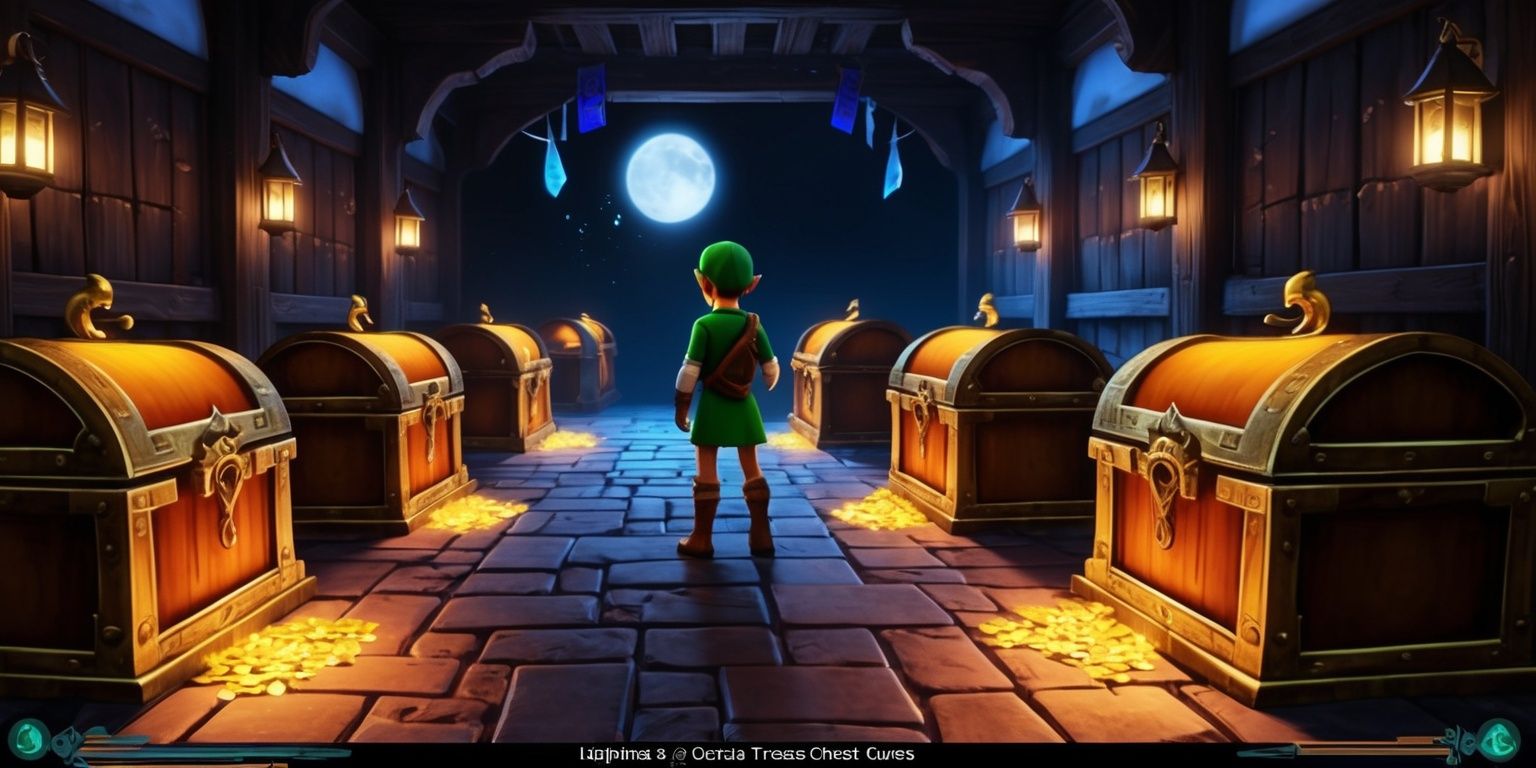
In The Legend of Zelda: Ocarina of Time, the Treasure Chest Game offers a compact but memorable diversion tucked into the nightlife of Hyrule Castle Town. It is not a combat challenge or a long quest chain, but rather a tense little test of observation, timing, and resource management. The reward makes it worthwhile, since the game leads to a Heart Piece, yet the real charm comes from how it blends mystery and atmosphere. For players who enjoy discovering hidden corners of the world, this side activity feels like a small secret waiting behind the city roads, particularly after dusk and the town takes on a calmer mood.
The activity becomes much more manageable once the player has access to the Lenses of Truth, which makes this a good example of Ocarina of Time’s layered world design. Rather than forcing immediate success, the game gently encourages exploration first and returns later with new tools. That structure gives the minigame more meaning because it is tied to progression in the broader adventure. What looks like a simple chest-picking contest actually becomes a reward loop based on preparation, careful observation, and knowing when to return with the right equipment.
Finding the Hidden Shopfront
The Treasure Chest Game is located on the west side of Hyrule Castle Town and only becomes available at night. This detail matters because the town changes noticeably between day and evening, and the game uses that shift to create a subtle sense of exclusivity. If you wander through the area during daylight hours, the shop won't be available in the same manner. That restriction gives the minigame a slightly secretive identity, as if it belongs to a different rhythm of the town that emerges only after dark. The location is easy to miss on a first visit, which adds a small sense of triumph when you at last uncover it.
Reaching the shop is straightforward once you know where to look, and the design supports that simplicity. The west side of castle town feels like a natural place for an odd little gambling-style game, since the setting already suggests crowded streets, wandering residents, and hidden businesses. The Treasure Chest Shop fits neatly into that atmosphere. If you'd rather not spend time waiting for the time change, the Sun’s Song can shift the day cycle quickly, letting you prepare for the game without lingering around town. That convenience makes the activity easy to revisit whenever you are ready.
Why Nighttime Matters
The decision to limit access to nighttime adds more than a mechanical barrier. It also changes the mood of the experience. Hyrule Castle Town feels busier and more open during the day, but at night the area becomes quieter and more focused. The Treasure Chest Game taps into that reduced pace, encouraging the player to slow down and pay attention. The timing requirement is simple, yet it strengthens the impression that this is an event with its own rules and its own character. It does not exist as a passive storefront you can enter anytime; it is connected to a particular segment of the world’s schedule.
This controlled access also encourages players to think about travel and preparation more deliberately. If you are already searching for collectibles or completing other side content, you may want to plan your route so the chest game fits naturally into your evening routine. The game’s night-only availability becomes part of its identity, almost like a performance that begins after sunset. That small design choice helps the minigame stand apart from more ordinary shops and gives it a strange, appealing sense of secrecy.
Paying to Play
Once inside, the shopkeeper introduces the rules and explains the basic objective. To begin, you pay 10 Rupees, which frames the activity as a low-cost gamble rather than a major investment. The charge is low enough that the majority of players can try it without much concern, but it still creates a feeling of commitment. Once you hand over the money, each selection matters, and every mistake has a visible consequence. That balance between low entry cost and high tension is one of the things that keeps the game so compelling. You are not losing much by trying, but you still want each room to go smoothly.
The game’s structure is simple to understand immediately. You must pick the right chest repeatedly in order to advance. The simplicity is important because it leaves room for suspense. The rules do not require complicated explanations or hidden systems. Instead, the challenge comes from the uncertainty of which chest contains the key and whether you have the right means to see through the deception. The shopkeeper’s explanation sets up a clean, focused objective that fits the minigame’s compact design.
The Role of the Lenses of Truth
The Lenses of Truth transform the Treasure Chest Game from a guessing exercise into a controlled puzzle. Without them, the player would be largely relying on chance, which can be frustrating and expensive in repeated attempts. With the Lenses equipped, however, the game becomes a careful visual exercise. They allow you to look through the chest fronts and determine which one holds the key before making your choice. This introduces an elegant layer of functionality, since an item obtained elsewhere in the adventure now becomes the key to solving a side activity in town.
That connection between item acquisition and minigame success serves as a compelling illustration of how Ocarina of Time weaves systems together. The Lenses are not just a utility for dungeon exploration or hidden paths. They also create a path to reliable success here. This makes the Treasure Chest Game feel less like a random diversion and more like a reward for thorough exploration. Players who have already spent time in the Bottom of the Well are rewarded with an easier, more satisfying route through the chest rooms.
Moving Through the Rooms
The game unfolds across multiple rooms, and each one requires a correct choice before you can proceed. The repeated structure gives the activity a rhythm: inspect, choose, open, and continue. That repetition may seem straightforward, yet in reality it leads to an escalating sense of anticipation. Each successful guess moves you closer to the final reward, and each room acts as a checkpoint. The design keeps the experience short enough to remain lively while still giving it enough steps to feel like a progression rather than a single screen of chance.
As you progress further into the game, the act of selecting the correct chest becomes more satisfying because it no longer feels like isolated luck. You are working through a chain of decisions with a clear goal at the end. The room structure also gives the game a miniature adventure quality. You enter, learn its rules, and make steady advances through a sequence of locked checkpoints. That sense of motion is part of what keeps the minigame memorable, even though the mechanics themselves are quite modest.
Rewards for Mistakes and Success
If you pick the incorrect chest, the game does not end immediately. Instead, you receive a Rupee reward, which softens the sting of the mistake and keeps the experience from feeling punishing. The value of the Rupee can vary depending based on how far you’ve advanced in the game, but the first rooms award Green Rupees. That detail helps maintain a light tone, since failed attempts still produce a small payout rather than a complete loss. The minigame therefore preserves a sense of movement even when things do not go as planned.
By contrast, success is connected to the final reward rather than immediate bonuses. The main incentive is the Heart Piece waiting in the last room. This makes the game especially appealing to completion-minded players who are collecting health upgrades throughout the world. The reward structure is elegant because it pairs small consolation prizes with a meaningful target. You never feel completely empty-handed, but you remain motivated to reach the end because the final reward is significantly more valuable.
Room-by-Room Tension
What makes the Treasure Chest Game interesting is not how intricate the rules are, but the emotional shape of the experience. Each round creates a quick burst of uncertainty, followed by the relief of getting it right or the mild disappointment of missing. That cycle repeats several times in a row, and the result is a tiny tension curve that lasts only a few minutes. It is a neat example of how game design can generate suspense without using enemies, traps, or time limits. The mere act of choosing a chest becomes enough to sustain attention.
The Lenses of Truth reduce the randomness, but they do not remove the anticipation entirely. Even when you know which chest is correct, there is still the pleasant rhythm of moving through each room one after another. The game has an almost ceremonial quality, as though each successful selection is a short test of patience and focus. This keeps the challenge gentle while still providing the player with a compelling reason to keep playing through the full sequence.
The Value of a Heart Piece
The final reward is a Heart Piece, and that alone gives the game lasting importance. In Ocarina of Time, Heart Pieces are among the most desirable side rewards because they contribute directly to survival and long-term progression. This means the Treasure Chest Game is not merely decorative content; it is a practical route to becoming stronger. The reward is also placed behind a simple but memorable minigame, which gives it an appealing balance of accessibility and value. Players who enjoy the hunt for upgrades will naturally want to include this activity in their route through the town.
The Heart Piece also reinforces the game’s placement within the broader world. It reminds players that even small side activities can matter greatly. A quiet shop in Castle Town can hide an item that improves Link’s durability, making the activity feel worthwhile far beyond its short playtime. That reward design encourages exploration, revisiting older areas, and paying attention to optional content that might otherwise be overlooked.
How the Shop Fits the World
The Treasure Chest Shop feels like a natural extension of Hyrule Castle Town rather than an isolated mini-event. Its presence adds personality to the city, suggesting that the capital area contains amusements and curiosities alongside its more formal spaces. The shop’s design also matches the game’s broader approach to optional content, where side activities are often woven into the geography of towns and villages. Instead of placing the challenge in a separate menu, the world itself becomes part of the activity.
This integration gives the shop more charm than a detached arcade-style feature would have had. You have to travel there in the world, time your visit, step inside, and interact with the proprietor. Each of those steps strengthens the sense that the game belongs to Hyrule rather than sitting outside it. It is a small content pocket, but it is shaped by location, timing, and item progression in a way that makes it feel fully embedded in the adventure.
A Simple Mechanic with Lasting Appeal
The Treasure Chest Game stands out because it does so much with so little. It asks you to enter at night, pay a small fee, use a useful item, and make a few correct choices in sequence. That is a compact loop, yet it leaves an impression because it combines mood, utility, and reward so neatly. The gameplay is accessible, the visual logic is easy to follow once the right tool is in hand, and the structure is brisk enough to avoid dragging. It becomes one of those side activities that players remember not because it is large, but because it is elegantly placed and satisfying to complete.
The game also mirrors the spirit of many side challenges in Ocarina of Time, where optional content often hides important treasure behind a clever mechanic. Rather than asking for mastery of movement or combat, this one relies on observation and preparation. That difference gives it its own identity. It is quiet, focused, and slightly mysterious, with a reward that makes the detour feel worthwhile every time you return to Castle Town after dark.